

Waste of time? Useless? All talk? As someone fascinated by philosophy but working in corporate, I spend much of my time with people who never had any contact with the study of philosophy. Even worse, some of them recall in pain a philosophy course they had in college decades ago — one which only confirmed their opinion: philosophy sucks.
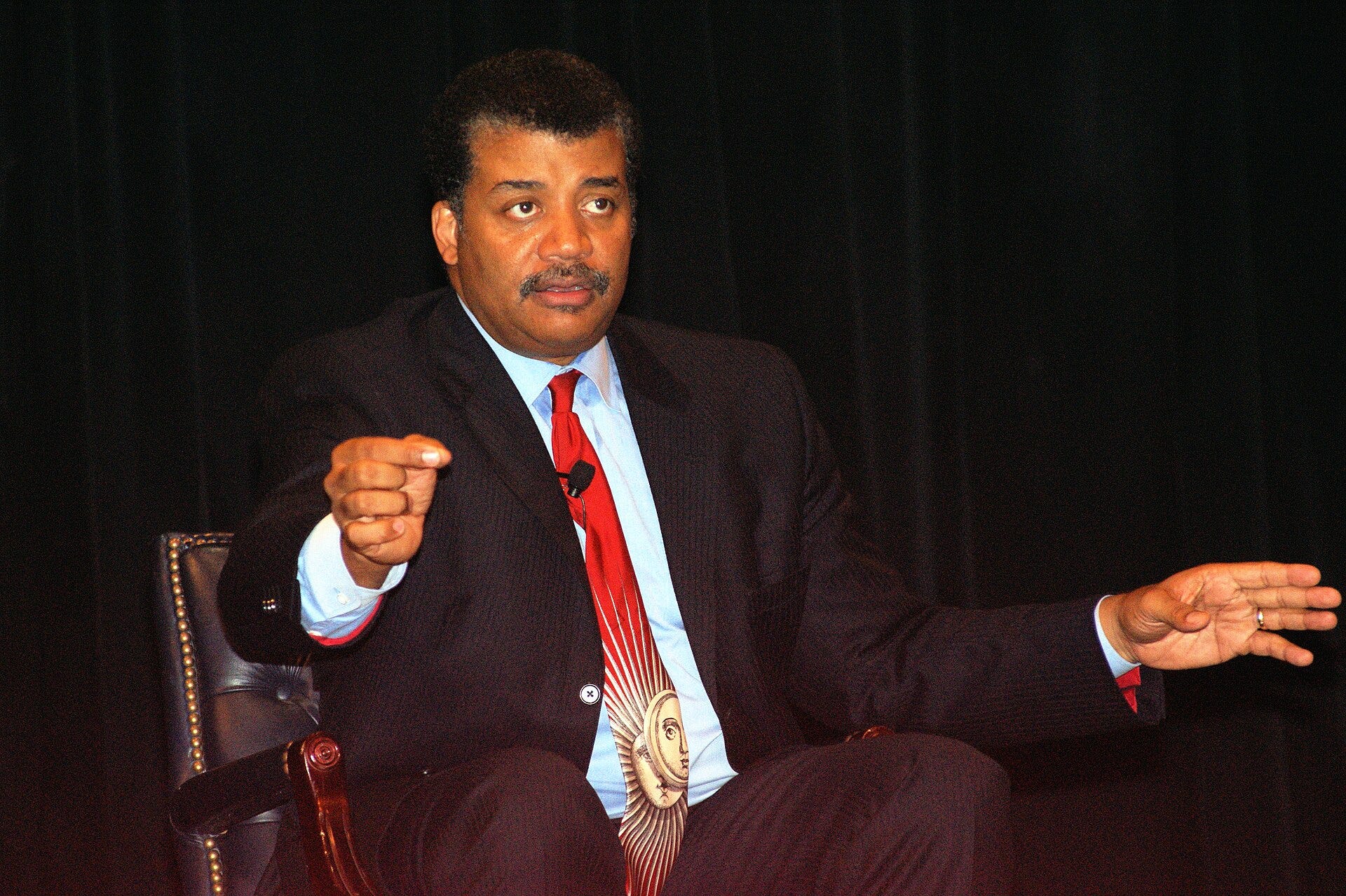
And they are not alone: Professor Elise Crull (whom I interviewed recently) asked Neil deGrasse Tyson why he was so averse to philosophy during her interview on StarTalk. For him, philosophers of science have not been able to have an impact on the field for decades. In short, science should be left to scientists.
So how come Neil deGrasse Tyson, my friends and acquaintances — all very smart people — converge in their critique of philosophy, while I invest much of my free time and energy on studying it? Should I reconsider my choice and turn to something more useful, more potent? I don’t think so, and here is why.
Even though all object to philosophy, they do so on different grounds. Let’s review each one separately and see why they fail.
‘Anything goes in philosophy’
As is often the case, some disagreement arises due to an ambiguity of language, an imprecise definition. Some readers will probably roll their eyes at this point — isn’t that a classical philosopher’s move to nitpick on definitions? — but allow me to elaborate first.
What do we mean by ‘philosophy’? Can’t the word be used as ‘it is my philosophy to be kind to people’ just as fairly as ‘philosophy is the search for truth’, while the sentences’ meaning differs strongly? In the same way, I can refer to either a financial institution or the extremities of a river when I say ‘I’ll go to the bank tomorrow’. Those ambiguities of language creep up constantly, and undermine our discussions.
So before judging philosophy, we should first agree on the terms: is philosophy simply a subjective perspective we hold on the way we conduct our life, or is it a rational reflection and debate to understand better a certain topic? In my and probably most cases, it is the latter. The gap between the two couldn’t be wider.
On one side, anything goes: if your philosophy is that money brings happiness, and mine that it doesn’t — we disagree, end of the story. On the other: we build the strongest arguments possible to justify one of our beliefs and expose them to others’ ruthless rounds of objection. After the storm, we look at what remains. On the former, we simply state preferences; on the latter, we find out what can be agreed on through a dialectical process.
Our preferences are dogmatic, philosophy is falsifiable.
‘Philosophy is useless — a waste of time’
This is one of the most frequent objection to philosophy: ‘it simply doesn’t cook rice’, ‘it doesn’t bring anything’. Why should we invest so much time in something without value? I would agree with the conclusion, if only the premises were true. But they aren’t.
The perceived strength of this argument is deeply worrying: nowadays, a valuable thing must have monetary value. If we can’t find a buyer in a market, then whatever we are trying to sell is useless. Meta has value, Netflix too. Many people want their services, how can it not be what ‘being valuable’ means? But this is an extremely limited understanding of the concept.
The argument — perceived as a slam dunk on the philosopher — rests on the assumption that value is money: physical bills, zeros on bank accounts, valuation in the NASDAQ, your willingness to pay to get something. But what about everything that is valuable to humans, abstracted from market forces? Love, friendship, arts, intellectual pursuit, emotions: aren’t those valuable, even much more necessary to a fulfilling life than acquiring the last smartphone? If we agree on this — and I really hope we do —, then why can’t philosophy be valuable even if it has no monetary end goal*?
The upshot is that the concept of value is much broader than assumed in the argument, and that not everything has to increase its stock price to justify its existence.
*To be clear, philosophy has monetary value as well in my opinion — as studying it makes us better decision-makers and critical thinkers —, but even assuming that it hasn’t any fails to support the conclusion.
‘Philosophy is gibberish and nonsense’
Let’s imagine that teleportation for space travels becomes a common thing, and that you decide to go on an Easter holiday to a faraway galaxy with your family. After teleporting, you end up on planet Uddas Battor, renowned for their types of space beers and Grakx hunting spots. Upon arrival, you face a challenge: the Battorians speak battorish, and you cannot make sense of it. However strong you focus on each syllable they utter, this all sounds incoherent to you. What would you conclude? Probably that they simply speak a different language, with different terms and concepts, and that you are not able to understand them.
In the same way, if you pick up a philosophical book or try to engage in a philosophical discussion, you would struggle to make head or tail of the debate. Of course, philosophy is not a different language entirely — most of the terms used are identical to the ones you use daily —, but they might differ from their usual meaning. Often, knowledge of the history of ideas and their debates is required to understand why philosophers focus on seemingly superfluous details.
For instance, it sounds strange that many philosophers accept the existence of a realm outside of time and space populated by the Forms of beauty, justice and numbers. And maybe it is absolutely false. But still, they are not endorsing it to feel special — they consider that this is the most convincing solution to philosophical problems such as ‘if numbers exist, what are we referring to when we use them?’. The alternative is to say that numbers don’t exist, which is a high price to pay for some*.
Similarly to the Battorians: the fact that philosophers understand each other indicates that they are communicating some kind of coherent information. Failing to understand it doesn’t show that it is nonsense, but only that the listener doesn’t get it.
*There are many alternatives to Platonism about numbers — though probably not the ones you have in mind. I am simply using this solution as an example and a primer for deeper thoughts.
‘We should turn to science which is evidence based’
Do electrons exist? What about unicorns? How do we ‘know’ that one exists, but not the other? Maybe we can say that electrons exist because we can set up experiments to find electrons, but we haven’t seen any unicorns yet. The problem is that we haven’t seen electrons either, because they are far too small to interact with visible light. What we actually did — many, many times — is see the effects that some kind of entity causes in certain conditions. We called those entities ‘electrons’ and have a coherent overall system (which includes them) to explain how physics works.
So electrons exist, right? Well, yes and no. We posit electrons in some ways arbitrarily — as causes from the effects we perceive. But alternative causes could also explain those effects, and maybe we will find out that they are in the future. Not long ago, we accepted that ether acted as a medium to support the travel of light through space. Nowadays, we don’t believe that ether exists, because new theories have turned out to predict the phenomena we observe better — making ether redundant. In short, one possible position when it comes to existence is to say: ‘whatever our current best scientific theories posit exists’.
The mind-bending consequence of this view is that ghosts — and anything else really — might exist. Their status as existing entity is just pending on a new, better scientific theory. Here is another challenge faced by supporters of this view: it is unclear which science we should consider when making ontological claims. Do markets exist, as economics state? What about depression, as psychology does? Or should everything be reduced to physics — where only basic atoms and fields, rather than say tables, exist? One of philosophy’s aim is to identify those challenges and think through their consequences.
Science and philosophy are not rivals. They are, and have always been, entangled.
If you’d like to learn more about this topic, listen or watch my interview with Prof. Elise Crull.
‘We have a moral duty to do something else’
Some might say that — in our times of uncertainty and existential threats — we have an obligation to invest our time and efforts into doing something more impactful than discussing philosophy, such as becoming a software engineer and supporting the push to reaching AGI as fast as possible (or is that rather the existential threat itself?).
This is a paradoxical argument, since it invokes philosophy against itself. But we can learn from this: maybe it is true, maybe we should do X rather than Y right now. But how would we know about it? Can a scientific experiment settle the matter? Can AI explain to us what duty is? Those are… philosophical questions! And their reason for being is that the most fundamental challenges we face are not wholly empirical, but only empirically informed.
Let’s consider climate change (which at first sight looks like a simple empirical challenge): is the climate warming? How fast? Are humans contributing to this? For all of those questions, we should turn to the sciences. But other — more fundamental — questions arise: what should we do about it? Is sacrificing liberties justified to counter it? Should we enable AI to make practical decisions on our behalf?
Philosophy’s importance only increases the closer we get to chaos, because it forces us to turn from ‘what is’ to ‘what should we do?’.
‘Philosophy doesn’t interest me’
Just as I argued that we have no duty to stop doing philosophy, I am happy to concede that we have no duty to practice it either. If you don’t see the point or don’t have time, then don’t do it.
That being said, I am convinced that everyone is an undercover philosopher: we all wonder about the meaning of life, the existence or non-existence of God, justice, what we owe each other. Of course, this doesn’t mean that reading academic papers on those topics will be fun — but accessible content is now widely available through podcasts, videos, and introductory books to satisfy our curiosity.
Have you ever, as a child, asked the most random — yet profound — questions and received a flat ‘this is just how it is’ or ‘enough with your questions’ from your caregivers? If so, know that those were great questions, and that you are now old enough to explore them on your own.